Physicians for Human Rights
Using science and medicine to stop human rights violations
Massacre in Burma: PHR Calls for Immediate Investigation
PHR today released a report detailing the organized attacks against Muslims that took place in central Burma in late March and resulted in the killing of at least 20 children and four teachers. The report provides evidence that state authorities, who idly stood by watching the events unfold, are complicit in these crimes.
How Doctors Would Know If Syrians Were Hit With Nerve Gas
President Obama affirmed Tuesday that there's evidence Syrians have been attacked with chemical weapons — in particular, nerve gas. But that's not the same as proof positive. So PHR is setting up a network to get fact sheets about chemical weapons into the hands of Syrian physicians.
Independent Investigation and Forensic Protocols Are Key to Assessing Chemical Weapons Use
Amid accumulating signs that chemical weapons may have been used recently in Syria, PHR repeats its call for a thorough independent investigation of such allegations to be conducted immediately that follows forensic protocols for handling evidence.
New Bipartisan Report Supports PHR’s Position on Torture of Detainees
PHR applauds the publication today of a bipartisan independent report that supports PHR’s longstanding contention that the interrogation and treatment of many detainees in US custody since 9/11 amounted to torture.
Burma’s Leaders Should Take Steps to Investigate and Prevent Anti-Muslim Violence
PHR calls on Burma’s government to act urgently to halt anti-Muslim incitement and to invite international investigators to launch an immediate independent investigation into a reported massacre of more than two dozen Muslim students in Meiktila on March 21.
Buried Alive: Solitary Confinement in the US Detention System
Solitary confinement is a form of segregation in which people are held in total or near-total isolation in small cells for 23 hours a day. It is used to control and discipline detainees in federal and state prisons, local jails, and immigration and national security detention facilities. Unlike incarcerated prisoners, immigration and national security detainees are held not as punishment for a crime but as a preventive measure, and will likely never be charged with a crime. For these people, solitary confinement then becomes entirely punitive, with dire consequences for their mental and physical health.
PHR-Led Bill to Protect Health Workers Introduced
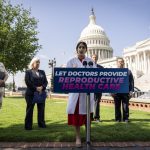
PHR today helped introduce a bill that would protect health workers globally from increasing attacks during times of war and unrest, and ensure they can continue to provide services without fear of violence, retribution, or arrest.
Evaluating Asylum Seekers: An Interview with Dr. Arno Vosk (SampsoniaWay.org)
Asylum Network volunteer Dr. Vosk discusses the role coincidence plays in keeping asylum seekers alive, his method of assessing trauma via an individual’s scars, and the difficulties people face when seeking refuge in the US, where “fearfulness and rejection of immigrants have become an accepted part of national policy.”
Dr. Eddy Ameen, Asylum Network Volunteer (SampsoniaWay.org)
Sampsonia Way speaks to Dr. Eddy Ameen, a licensed professional counselor who works as a volunteer in Physicians For Human Rights’ Asylum Network program.
The closure of Guantánamo: a modern Gordian Knot (May 23, 2013)
If the Obama administration wants to successfully resolve the 'Gordian Knot' that is the Guantánamo Bay detention centre, it has to untangle it carefully with a comprehensive approach proving that indefinite detention is not needed.
Visit by Burmese Leader Offers Key Opportunity to Press for Human Rights Improvements (May 20, 2013)
Burmese President Thein Sein is scheduled to meet with President Obama today, marking the first visit to the United States by a Burmese head of state in 47 years. Since that visit in 1966, the people of Burma have endured governmental mismanagement, brutal military rule, and serious human rights violations. Burma became a pariah state, synonymous with its infamous imprisonment of political activists and militarized attacks on civilians.
Ongoing Politicization of Medical Affairs in Bahrain Requires Vigorous Response (May 3, 2013)
The cancellation of an international medical ethics conference that had been scheduled for April 10-12 in Bahrain is another sign that the country’s rulers continue a systematic pattern of politicizing medical affairs.
Massacre in Central Burma (May 2013)
Anti-Muslim violence swept through central Burma in spring 2013, reportedly sparked by an argument at a gold shop and the killing of a Buddhist monk in Meiktila, Mandalay. Homes, mosques, and madrassas were destroyed, and over 100 people lost their lives. This report is the result of an investigation by a PHR team, undertaken shortly after the violence occurred.
President Obama Urged to Coordinate Executive Branch Response to Senate Committee's Study on CIA Interrogation Program (May 2013)
PHR has joined seven other NGOs, including the ACLU, Human Rights Watch, The Center for Victims of Torture, and others, to urge President Obama to make sure the Executive Branch response to the Senate Select Committee on Intelligence study is not driven by individuals who might be implicated in the CIA’s use of torture.
Securing Afghanistan's Past: Human Remains Identification Needs and Gap Analysis (April 2013)
PHR's report outlines steps that Afghanistan can take if it is to make progress in addressing the right to truth of victims of more than three decades of violent conflict by identifying missing and disappeared persons.